Inflation figures sparked hawkish rhetoric from central bankers

Summary
- Hotter-than-expected US inflation prompted Fed officials to signal possible rate hikes, including a 25-basis-point move in December and potentially 50 basis points if core inflation stays elevated.
- Euro area inflation rose to 4.0% in October from 3.8% in September, driven especially by energy. Bundesbank President Joachim Nagel described a December ECB hike as “quite obvious.”
- The article says markets now face tighter monetary policy on both sides of the Atlantic, with the US 10-year yield near 5%. It expects rates to remain high for longer, weighing particularly on highly valued growth stocks.
This content is generated by AI. You can give feedback on it in the Inderes forum.
Automatic translation: Originally published in Finnish 11/11/2026, 05:34 GMT. Give feedback here.
The fixed income markets are turning in a tighter direction in both the United States and the euro area. Inflation is accelerating, which has prompted central bankers at both the ECB and the Fed to talk about interest rate hikes.
In the US, October consumer price inflation came in hotter than expected, last week's figures showed. Inflation accelerated to 0.4% and core inflation to 0.3% month-on-month, which clearly exceeded expectations. Central bankers subsequently reacted, and Fed messaging rapidly tightened on Tuesday. Board member Christopher Waller stated in the news that he is leaning toward a 25 basis point hike at the December meeting. According to him, a 50 basis point hike is also possible if core inflation continues at its current monthly pace. Meanwhile, Dallas Fed President Lorie Logan estimated that two additional hikes are needed. The turnaround is clear, as interest rate cuts were still expected earlier in the year.
Fed central bankers' speeches: the redder, the more hawkish
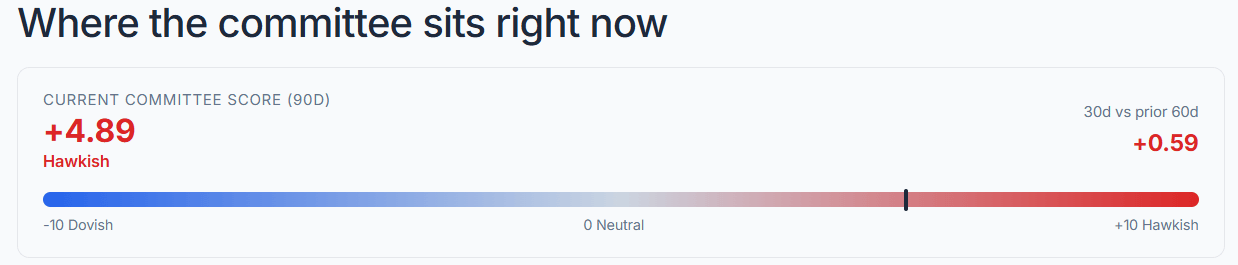
Source: centralbank.watch
The situation in the euro area is very similar. According to preliminary October data, inflation accelerated to 4.0% from 3.8% in September, marking the highest reading in three years. This is driven in particular by energy, the price of which rose by 20.8% over the year. Bundesbank President Joachim Nagel has already gone as far as to describe an ECB interest rate hike in December as "quite obvious." Otherwise, central bankers' rhetoric has also remained hawkish, meaning they remain wary of inflation and rate hikes are being anticipated.
ECB central bankers' speeches: the redder, the more hawkish
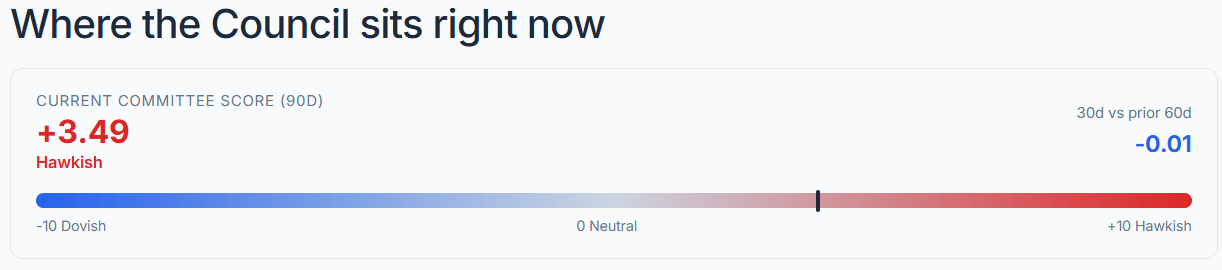
Source: centralbank.watch
It is difficult for the markets that monetary policy is tightening on both sides of the Atlantic at the same time. The US 10-year yield rose again to around 5% on Tuesday. Rising interest rates, in turn, weigh most heavily on highly valued growth stocks, because their value is based on cash flows far in the future.
It now looks like interest rates will remain high for longer than was expected just a moment ago. When inflation accelerates in both economic regions simultaneously, central banks' room to maneuver narrows and a swift return to a looser monetary policy is not in sight. The inflation and labor market figures of the coming weeks will determine how the interest rate picture ultimately evolves.


